Wondering whether your next home dollar stretches farther in Simpsonville or Greenville? If you are a move-up buyer trying to balance more space, better daily function, and a location that still fits your lifestyle, this is one of the biggest decisions in the Greenville area. The good news is that both cities offer strong options, but they deliver value in different ways. Let’s break down where you may get more home, more convenience, and the right fit for your next move.
Price per square foot matters
If your main goal is to move up in size, Simpsonville usually gives you more house for the money. In March 2026, Simpsonville’s median sale price was $333,000, with a median price per square foot of $172. Greenville’s median sale price was $480,000, with a median price per square foot of $295.
That gap is meaningful when you are comparing what your budget can buy. In simple terms, the same budget often reaches farther in Simpsonville, especially if you want more interior square footage, more bedrooms, or more driveway and yard space. Greenville typically commands a premium for a closer-in address and a broader in-town housing mix.
Days on market tell part of the story
The pace of the market can also shape your buying strategy. In March 2026, homes in Simpsonville averaged 69 days on market and typically saw 1 offer. Greenville homes averaged 52 days on market and 2 offers.
That does not mean every Greenville home will be a bidding war or every Simpsonville home will sit. It does suggest that Greenville can be a bit more competitive overall, while Simpsonville may offer a little more room to compare options and weigh tradeoffs carefully.
Space and lot size
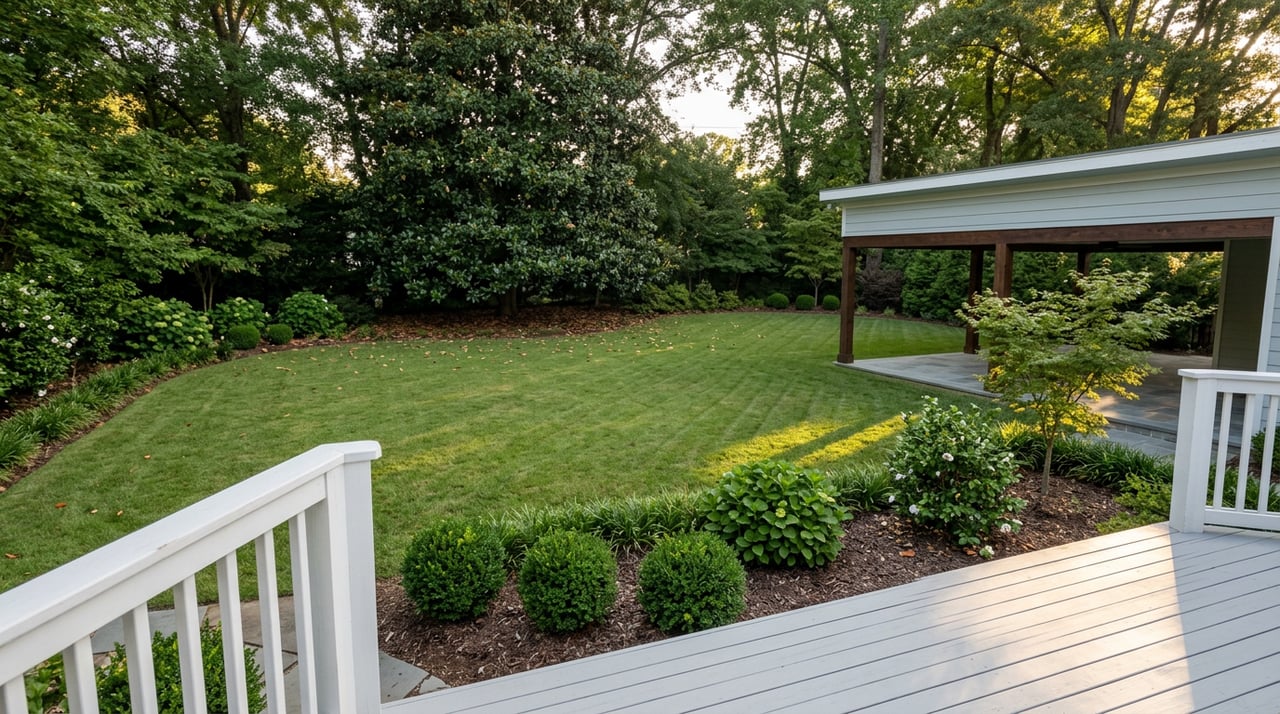
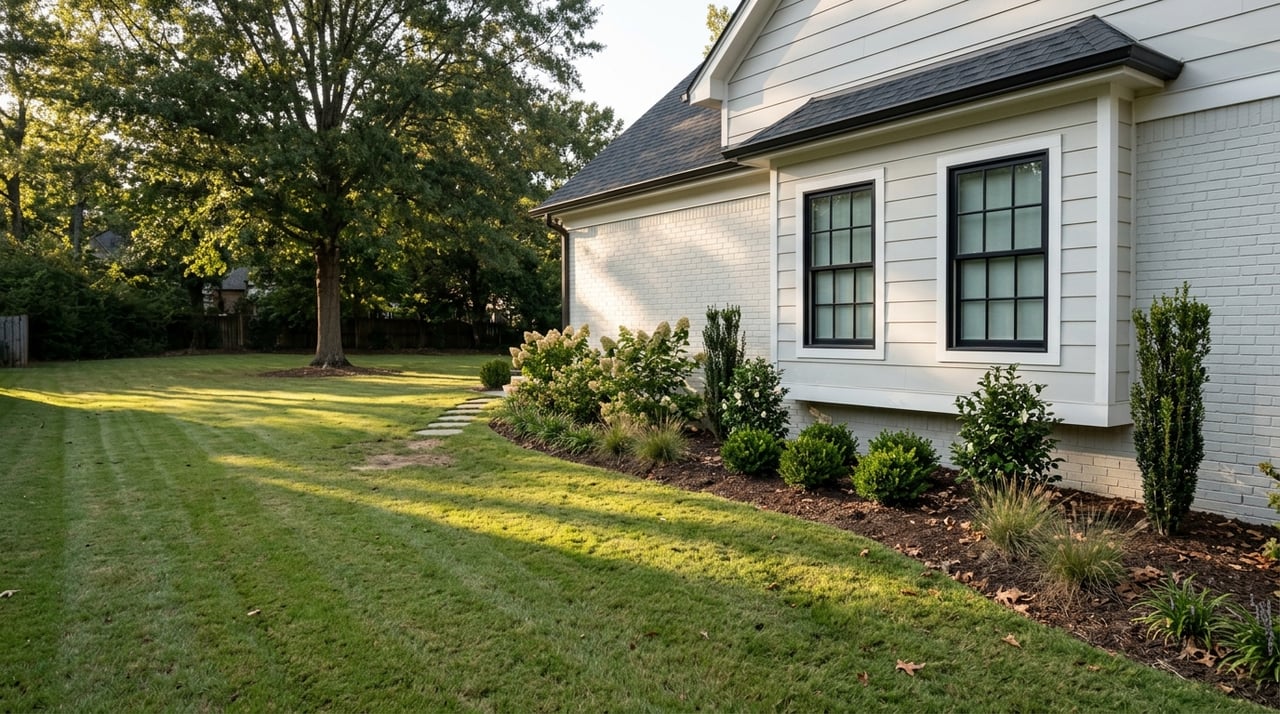
For many move-up buyers, more home is not just about square footage inside the walls. It is also about the lot, the driveway, the backyard, and how the home sits on the property. This is one area where Simpsonville has a clear edge for buyers who want a more traditional suburban setup.
Simpsonville favors larger suburban lots
Simpsonville’s zoning ordinance gives a useful clue about development patterns. In its R-Lo low-density district, new detached single-family lots require a minimum lot area of 10,000 square feet and a minimum frontage of 50 feet. In some new subdivisions, lot averaging is allowed, but no lot can fall below 7,500 square feet.
That helps explain why Simpsonville often feels like the better match if you want more yard space or more separation between homes. If you picture a larger backyard, easier parking, or a more classic suburban lot pattern, Simpsonville often lines up well with those priorities.
Greenville offers more housing variety
Greenville’s zoning framework points in a different direction. The city’s public GIS guide includes house-scale, neighborhood-scale, shopfront mixed-use, community-scale, mixed use downtown, business, industrial, and special districts.
For buyers, that means Greenville offers a wider mix of housing forms and a more urban development pattern. You may find the tradeoff is less lot size in exchange for closer access to downtown amenities, trails, and in-town convenience.
Commute and mobility
Your daily routine matters just as much as the house itself. If your move-up purchase is supposed to improve quality of life, it helps to think beyond bedrooms and baths.
Greenville has stronger in-town access
Greenville has the stronger in-town mobility profile based on city access and transportation data. The city highlights access to Interstates 85, 185, and 385, along with U.S. highways 25, 29, 123, and 276. Greenville also points to the 28-mile Swamp Rabbit Trail Network.
Redfin’s city data shows Greenville with a Walk Score of 43, Transit Score of 19, and Bike Score of 39. Census QuickFacts reports a mean travel time to work of 19.0 minutes for Greenville residents. If you want a more central lifestyle with better walkability and trail access, Greenville has the advantage.
Simpsonville is more car-oriented
Simpsonville works well for buyers who are comfortable with a driving-based routine. The city’s 2040 plan evaluation notes regular maintenance and improvement of I-385 ramps, and it also notes that Simpsonville discontinued its portion of local GreenLink funding because of low ridership.
Redfin’s city data shows Simpsonville with a Walk Score of 21 and a Bike Score of 24. Census QuickFacts reports a mean travel time to work of 22.4 minutes. If your routine centers on driving and you want more home in exchange, Simpsonville can be a smart tradeoff.
Lifestyle and amenities
Move-up buyers are not just shopping for a floor plan. You are also choosing how you want everyday life to feel once the boxes are unpacked.
Simpsonville offers suburban convenience
Simpsonville’s official city site describes downtown as a vibrant hub with local restaurants, boutiques, a food hall, mixed-use development, murals, and the first stretch of the Simpsonville segment of the Swamp Rabbit Trail. The city also highlights Heritage Park, which includes ball fields, playgrounds, paved trails, a miniature steam train, and the CCNB Amphitheatre at Heritage Park.
That mix gives Simpsonville a lifestyle that feels suburban but still active. If you want neighborhood-oriented living with a growing downtown and strong park access, Simpsonville offers a lot to like.
Greenville brings a broader urban amenity mix
Greenville offers a larger and more established in-town amenity network. Official city pages highlight downtown shopping and restaurants, Falls Park, Unity Park, the Swamp Rabbit Trail Network, a broad parks and recreation system, neighborhood associations, and historic districts including West End, Pettigru, Overbrook, and Hampton-Pinckney.
For buyers who want more going on close to home, Greenville often justifies its higher pricing with convenience and lifestyle access. You may give up some lot size or interior space, but gain a more connected city experience.
Schools require address-level review
If schools are part of your move-up decision, it is important to stay precise. Greenville County Schools uses the custodial parent’s address, subdivision, apartment complex, or other multifamily dwelling to determine current school assignments.
The district also offers school choice and magnet options, and about 14% of its roughly 77,000 students attend on choice. Because of that, it is best to verify school assignments by exact property address rather than assume a school pattern based on Simpsonville or Greenville city limits alone.
Population and housing mix
City size and housing mix can influence the feel of your next move. Census QuickFacts estimates Simpsonville’s 2024 population at 28,078, while Greenville’s 2025 population estimate is 75,310.
The owner-occupied housing rate also differs. Simpsonville’s rate is 68.5%, compared with 41.1% in Greenville. That suggests Greenville has a broader mix of renter-occupied and non-owner-occupied housing, while Simpsonville leans more heavily toward owner-occupied homes.
Which city gives you more home?
If your definition of “more home” means more square footage, more yard space, and a more traditional suburban setting, Simpsonville usually comes out ahead. The lower median price and lower cost per square foot support that conclusion, and the city’s zoning pattern reinforces it.
If your definition of “more” includes more walkability, more trail access, more downtown convenience, and a broader in-town amenity base, Greenville may still be worth the premium. You may buy less house per dollar, but gain a lifestyle that feels more central and connected.
How to choose with confidence
The best move-up decision usually comes down to three questions:
- How much space do you want inside and outside the home?
- How important is in-town access versus a more suburban routine?
- Which exact property locations work for your school, commute, and lifestyle needs?
When you answer those questions clearly, the right city often becomes much easier to identify. Simpsonville usually wins on pure space value. Greenville usually wins on city access and lifestyle convenience.
If you want help comparing specific neighborhoods, price points, and homes that match your next chapter, Linda O'Brien can help you narrow the options and move forward with confidence.
FAQs
Is Simpsonville or Greenville more affordable for move-up buyers?
- Based on March 2026 sold data, Simpsonville is generally more affordable, with a median sale price of $333,000 versus $480,000 in Greenville and a much lower median price per square foot.
Do buyers get bigger lots in Simpsonville or Greenville?
- Simpsonville is generally the stronger fit if you want a more traditional suburban lot pattern, with zoning in some low-density areas requiring 10,000-square-foot lots for new detached single-family homes.
Is Greenville more walkable than Simpsonville?
- Yes. Greenville’s published mobility data shows a higher Walk Score, Transit Score, and Bike Score, and the city highlights broader access to major roads and the 28-mile Swamp Rabbit Trail Network.
Should buyers compare schools by city name in Greenville County?
- No. Greenville County Schools assigns schools by exact address, and choice and magnet options can also affect where a student attends.
What is the biggest tradeoff between Simpsonville and Greenville?
- The biggest tradeoff is usually space versus location. Simpsonville often gives you more house and yard for the money, while Greenville often gives you more in-town convenience and lifestyle access.