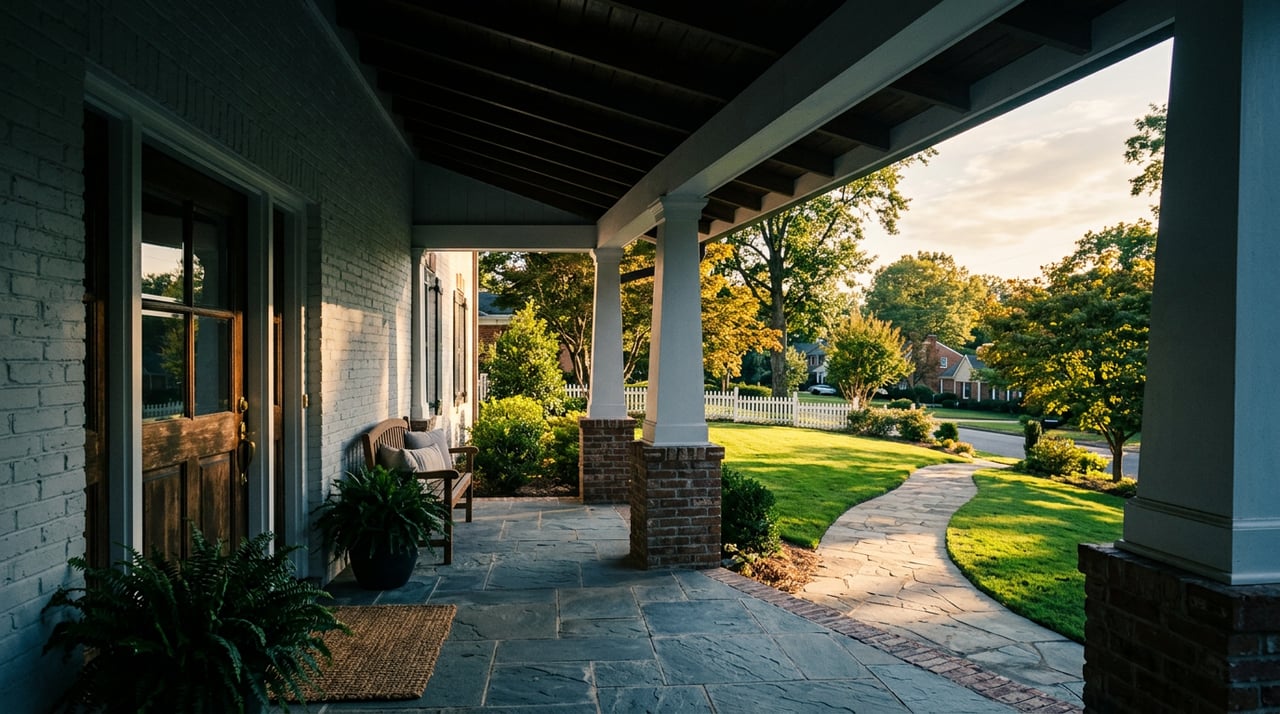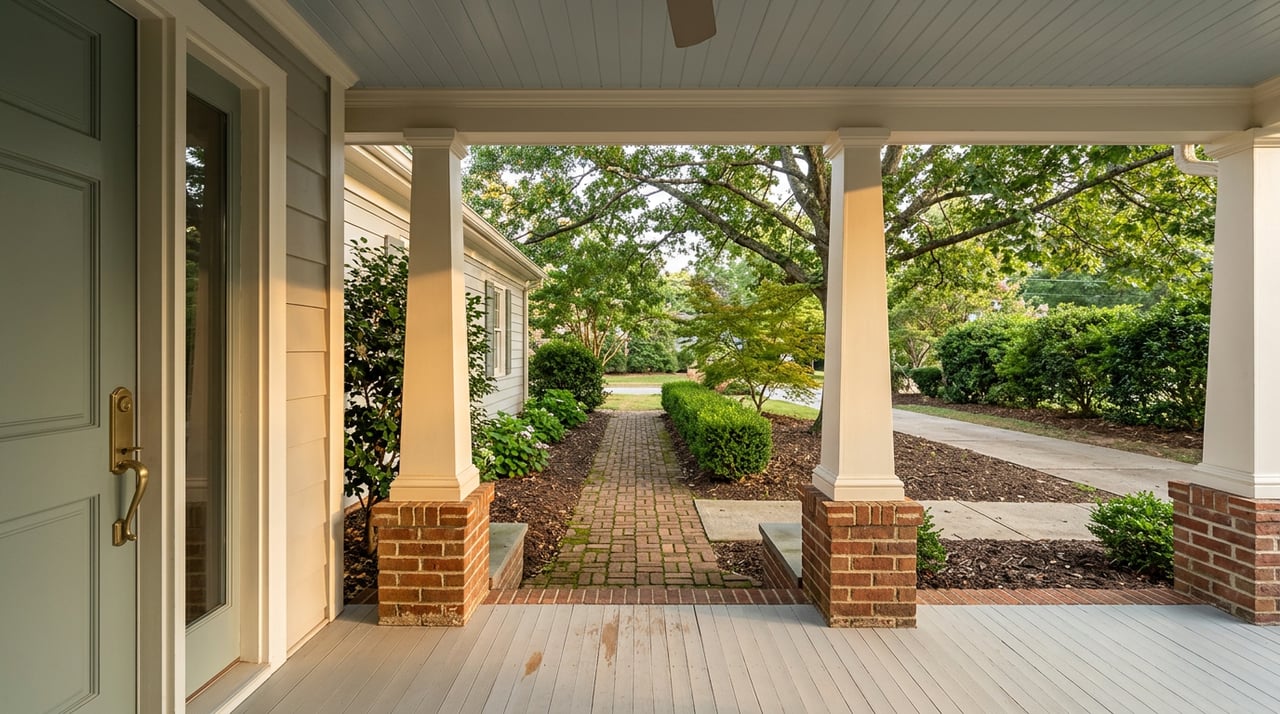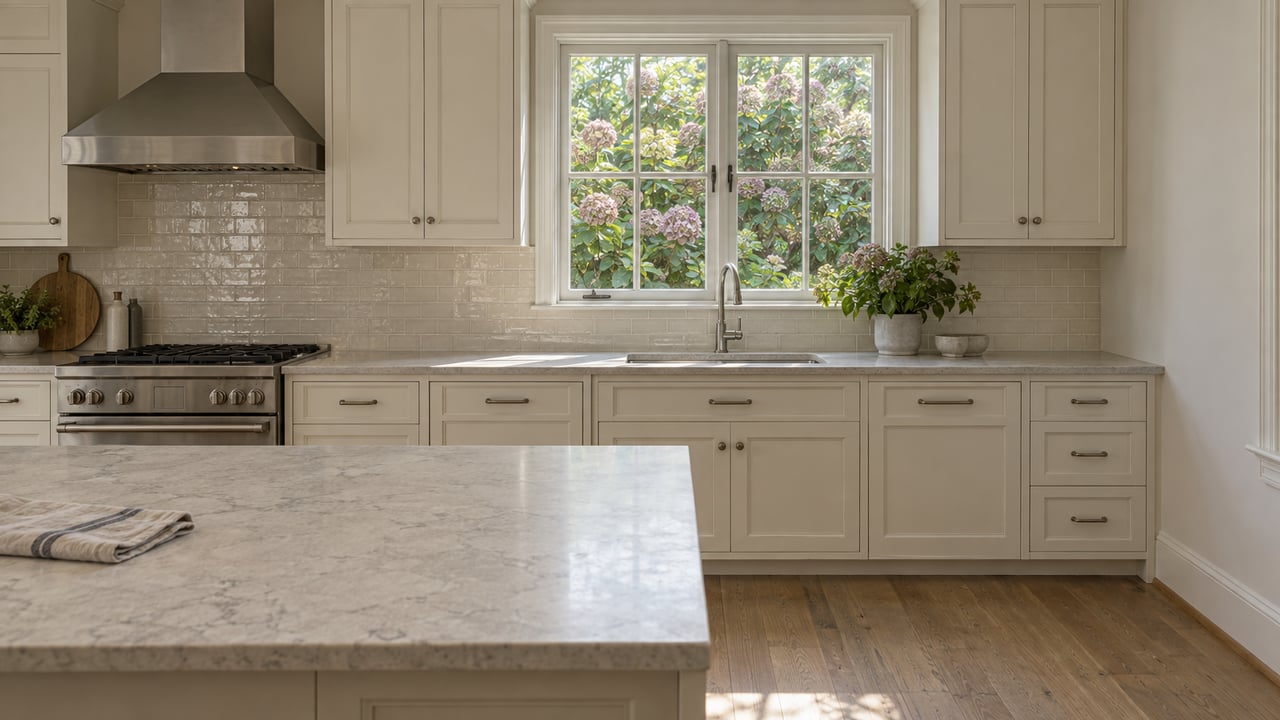
Ask what a home costs in Simpsonville and the honest answer is that it depends on which Simpsonville you mean.
A buyer working from the citywide median will budget around $400,000, the figure that closed sales landed on across a six-month stretch through July 2026. That number feels like a plan. Then the same buyer tours a brand-new single-family house off Sullivan Road listing in the low $300,000s, and an hour later stands in a 2016 townhome in Five Forks asking $405,000, and neither one matches the number they walked in with. Both are technically Simpsonville. Neither is the median.
The gap isn't a fluke of timing or an odd listing. It's the shape of the market. Simpsonville runs two distinct price tiers depending on which road you're shopping, and the corridor matters more than the age of the house, the builder, or even the square footage.
Two Corridors, Two Markets
The Woodruff Road and Five Forks side of the city sits well above the citywide median. Average house prices there reached $595,000 in August 2026, up 20.9% from a year earlier, with the three-month median running $495,000. Inside that pocket, established executive subdivisions push higher still. Five Forks Plantation, built out mostly between 2005 and 2017 with homes running 3,000 to 5,400 square feet, carries a median sale price of $680,000. Even the townhome product in that corridor isn't cheap: Townes at Five Forks, built 2016 through 2020, has a median sale price of $405,000 for attached homes under 2,600 square feet.
Drive the other direction and the math resets. Along Sullivan Road and near West Georgia Road, D.R. Horton's River Trace community is selling new single-family homes for $302,000 to $363,000, with floor plans starting around 1,518 to 1,925 square feet and no HOA fee attached. Further out on New Harrison Bridge Road near Fork Shoals Road, the builder's Harrison Valley community prices new construction from $332,000 to $454,000, also with no HOA.
Put the four side by side and the pattern is plain:
| Community | Corridor | Price Range | Built | HOA |
|---|---|---|---|---|
| Five Forks Plantation | Woodruff Road / Five Forks | $680,000 median | 2005-2017 | Yes |
| Townes at Five Forks | Woodruff Road / Five Forks | $405,000 median | 2016-2020 | Yes |
| River Trace (D.R. Horton) | Sullivan Road / W. Georgia Road | $302,000-$363,000 | New construction | None |
| Harrison Valley (D.R. Horton) | New Harrison Bridge Road | $332,000-$454,000 | New construction | None |
A citywide median of $400,000 sits almost exactly between these two tiers, which is precisely why it's a poor guide for anyone actually shopping. It describes an average of two different markets, not the price of a typical house in either one.
Why the Newer House Is the Cheaper One
The detail that trips people up most is the age reversal. Townes at Five Forks is a decade-old townhome community, built between 2016 and 2020, and it still commands a higher median sale price than a brand-new single-family house at River Trace, built this year with a larger lot and no shared wall.
New construction usually costs more than resale in the same market, because a buyer is paying for fresh systems, a builder warranty, and finishes nobody else has lived with. That's not what's happening here. The premium in Simpsonville isn't attached to the house. It's attached to the road.
Five Forks sits closer to the Woodruff Road retail corridor and to Greenville itself, inside a school assignment pattern that includes Monarch Elementary and the Mauldin feeder schools, and within an established network of gated and semi-gated subdivisions like Boxwood, Kingsbridge, and Cobblestone that have been selling and reselling for two decades. Buyers are paying for that location and that track record more than they're paying for a five-year-old roof. Meanwhile River Trace and Harrison Valley sit further from that retail core, closer to Fountain Inn, on roads that are only now filling in with rooftops. The construction is newer, but the location hasn't built the same price history yet.
The HOA Line Item Nobody Budgets For First
There's a second cost hiding in this comparison that has nothing to do with the sale price on the listing sheet. Five Forks Plantation and Townes at Five Forks both carry HOA dues, standard for gated or amenity-rich subdivisions of that era. River Trace and Harrison Valley currently carry none.
That difference changes the real monthly comparison. A buyer choosing between a $405,000 townhome with an HOA fee and a $360,000 new build with none isn't just comparing purchase price. They're comparing two different fixed-cost structures that compound over the life of ownership. For a move-up buyer stretching a budget to make a school zone or a gate work, the HOA line is often the number that decides whether the higher-priced option is actually affordable month to month, not just at closing.
What This Means for a Move-Up Budget Right Now
For a buyer with $350,000 to $450,000 to spend in Simpsonville this fall, the corridor choice is really a choice between two different kinds of value. On the Sullivan Road and New Harrison Bridge Road side, that budget buys a new house, a warranty, and no HOA, in exchange for being on the newer, less proven side of town. On the Five Forks side, the same budget buys an established address inside the Woodruff Road corridor, but likely means a townhome rather than a detached single-family home, plus an HOA fee.
Neither choice is the "better" one in the abstract. They're different trades, and the citywide median doesn't tell a buyer which trade they're actually making until they've already toured both sides.
For buyers with more room, upward of $500,000, Five Forks Plantation and comparable executive subdivisions open up single-family homes in the 3,000 to 5,400 square foot range, the kind of space that doesn't exist yet in the newer Sullivan Road communities, where floor plans still top out well under 2,000 square feet. That's less a pricing quirk than a supply fact: the larger, established lots got built out in the corridor that was developable first, and the newer corridor is still catching up in both size and price.
Pace tells a similar story. Five Forks homes are taking about 66 to 69 days to sell as of August 2026, only slightly slower than the citywide average. That suggests the market has already priced in the premium rather than being caught in a bidding frenzy. The $200,000 gap between corridors isn't a sign of an overheated pocket. It's a sign that the pricing has settled into place and buyers are treating it as the going rate.
FAQ
Is Five Forks its own town, separate from Simpsonville? No. Five Forks is an unincorporated area and community name within the broader Simpsonville area of Greenville County, not a separate municipality. It shows up as its own market in listing data because it has a distinct identity and price pattern, but it's part of the same city for zoning, schools, and address purposes.
Do all new construction communities in Simpsonville skip HOA fees? No. It varies by builder and community. River Trace and Harrison Valley currently have none, but plenty of new subdivisions in the area, including several gated or amenity-heavy communities in the Five Forks corridor, do carry HOA dues. The fee structure has to be checked community by community, not assumed from the fact that a home is newly built.
If you're weighing a Five Forks address against a new build further out and want help running the real monthly numbers side by side, not just the sale price, Linda O'Brien can walk through both corridors with you and help you figure out which trade actually fits your budget. Schedule Your Free Home Consultation.